


Korea-Indonesia Youth Collaboration Program Successfully Bridges Dialogue on Global Issues
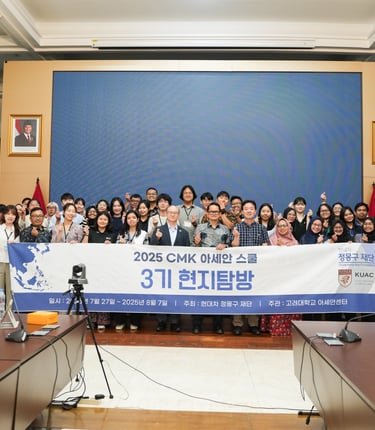
Held on July 28, 2025, the program by KIC FISIP UI and the Chung Mong-Koo School of ASEAN Studies (CSAS) gathered Korean and Indonesian students to discuss global challenges, exploring topics like climate change, food security, and sustainable development.
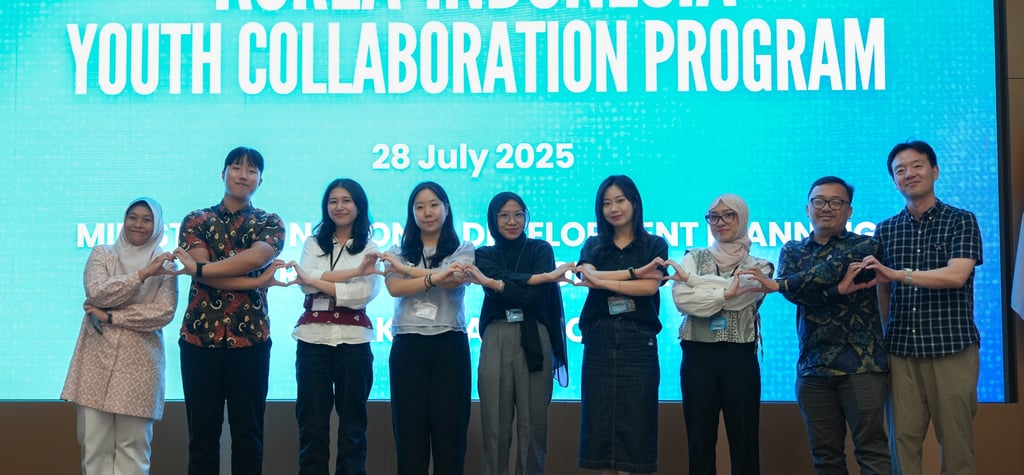
Depok, July 29, 2025 — Universitas Indonesia witnessed an inspiring collaboration between Indonesian and South Korean students during the Korea-Indonesia Youth Collaboration Program, held as a full-day event on Monday, July 28, 2025. Initiated by the Korea-Indonesia Connection (KIC) of FISIP UI in partnership with the Chung Mong-Koo School of ASEAN Studies (CSAS), the program aimed to facilitate the exchange of ideas and dialogue among the youth of both countries.
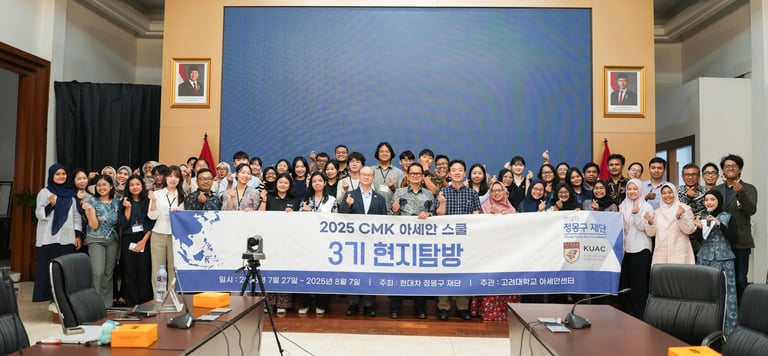
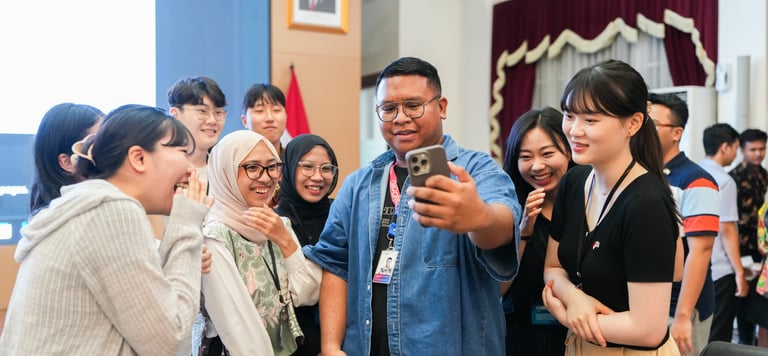
The event began at FISIP UI with a warm welcome from the Dean of FISIP UI, Director of KIC FISIP UI Dr. Getar Hati, and Professor Jae Hyeok Shin from the Korea University ASEAN Center (KUAC). In a collaborative atmosphere, participants were divided into five cross-national groups to discuss strategic social themes such as climate change, educational inequality, and sustainable development.
“I would like to express my sincere appreciation for the active participation of all the students in today’s program. Your enthusiasm and spirit have created a dynamic and meaningful learning environment from the future leaders of ASEAN-Korea,” said Dr. Getar Hati, Director of the KIC FISIP UI Program. “Through the morning group discussions and afternoon presentations at Bappenas, we have witnessed the importance of cross-cultural collaboration in generating ideas that are not only academically critical but also socially and humanely relevant.”
Each group presented their creative projects before academics and officials at the Ministry of National Development Planning (PPN)/Bappenas office. One team, Be-trition, proposed an innovative solution to undernutrition in the ASEAN region, especially in Indonesia, inspired by policies implemented by the South Korean government. Meanwhile, Greenlink designed a concept for decentralized renewable energy in rural areas. Equally compelling, the team Lestari Kita highlighted sustainable forestry policies between Indonesia and Korea.
One of the Korean participants, Yejun Kim, shared, “Beginning our field research here in Jakarta, Indonesia, has been an honor. Meeting the students of UI has been an extraordinary experience as we were able to view common issues from different perspectives. Personally, I believe we may cross paths again one day on the global stage. I hope to see you all there. Thank you.”
Khansa Maritza, a participant from FISIP UI, also shared her thoughts: “Through this program, we’ve learned their perspective on sustainability policies in Korea. We exchanged views on sustainability issues and the potential for collaboration between Indonesia and Korea. This has been such a valuable lesson for me—I’ve learned so much from them.”
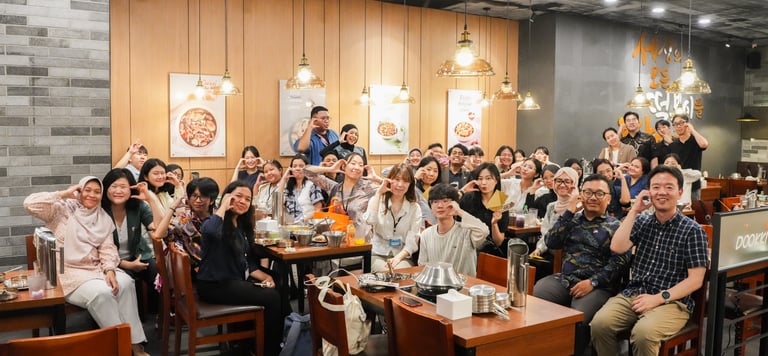
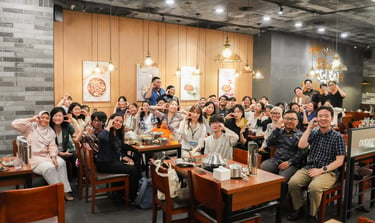
The event concluded with a dinner and informal sharing session that further strengthened the connections between participants. Cross-cultural friendships and future collaboration plans blossomed in a warm and welcoming atmosphere.
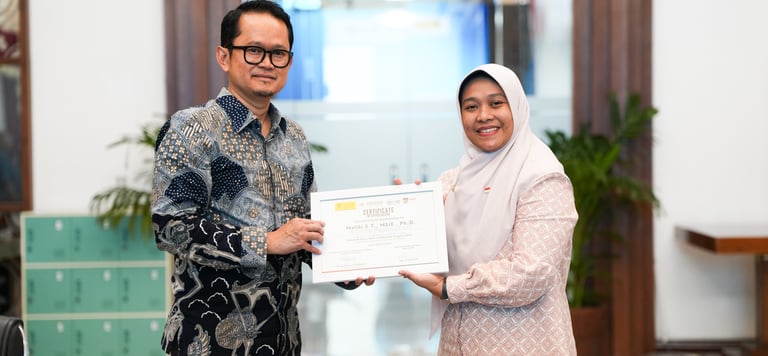
This program demonstrated that youth from Indonesia and Korea are not only capable of thinking critically, but also of co-creating solutions with a spirit of collaboration and creativity.
Korea–Indonesia Connection
Bridging dialogue on Korea-Indonesia relations.
Contact us
Collaborate
kic.fisip.ui@gmail.com
© 2025. All rights reserved.