
Global Partnership in Advancing Sustainable Cities Highlights: Collaborative Study on Waste Management in Vertical Housing at Rusunawa KS Tubun
Korea-Indonesia Connection (KIC) FISIP UI, in collaboration with Direktorat Pengabdian Masyarakat dan Inovasi Sosial (DPIS) Universitas Indonesia, Ink & Talk Community, and Karang Taruna Rusunawa KS Tubun, implemented a community-based waste management program. The program brought together researchers, local communities, housing management, and international partners from South Korea to promote a cleaner, healthier, and more sustainable urban living environment.
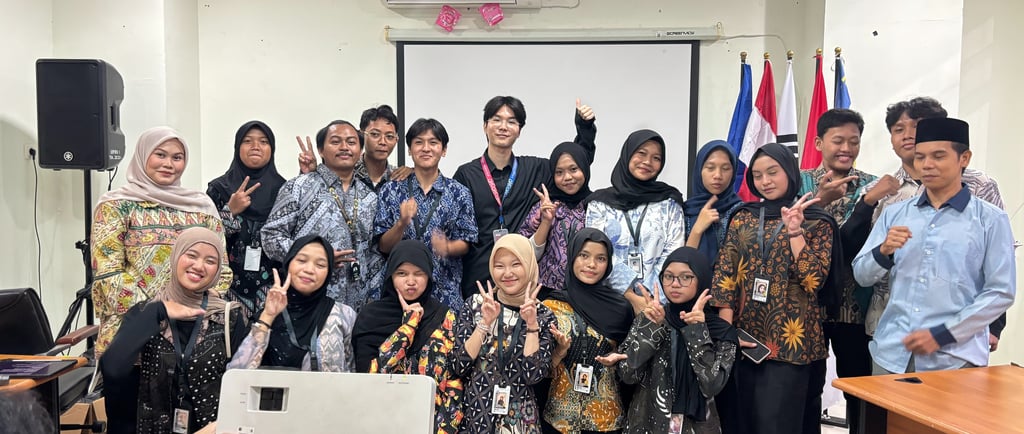
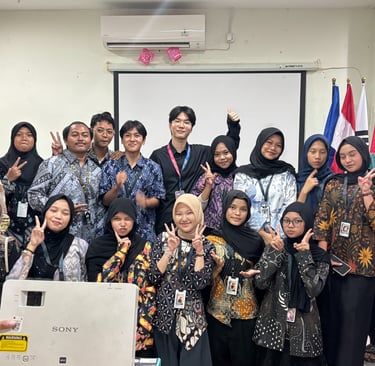
Jakarta, Indonesia – Direktorat Pengabdian Masyarakat dan Inovasi Sosial (DPIS) Universitas Indonesia successfully implemented a community-based waste management program at KS Tubun Public Housing (Rusunawa KS Tubun), West Jakarta. The initiative was carried out in collaboration with Korea-Indonesia Connection (KIC) FISIP UI, Ink & Talk Community, the Youth Organization (Karang Taruna) of Rusunawa KS Tubun, developed in response to ongoing challenges in waste management within vertical housing communities, where household waste is often disposed of without proper separation and community participation in waste sorting remains limited. The program aligns with the Jakarta Provincial Government’s ongoing efforts to encourage waste segregation as a collective movement among residents, contributing to a cleaner, more comfortable, and sustainable city.
Through a participatory approach, KIC FISIP UI and its partners carried out a series of activities aimed at strengthening community capacity while developing a more effective and sustainable waste management system. The program brought together researchers, local communities, housing management, and international partners from South Korea to promote a cleaner, healthier, and more sustainable urban living environment.
An initial assessment revealed that although residents of Rusunawa KS Tubun had access to daily waste collection services and a designated waste collection area, there were no formal community regulations governing waste management and no household waste-sorting system in place. Recycling efforts were largely carried out by a small group of residents through a community waste bank. At the same time, the assessment highlighted the community's strong social cohesion and active participation in collective activities, providing a solid foundation for community-based environmental initiatives. Based on these findings, the program focused on empowering local youth through the Karang Taruna as agents of change who could promote sustainable waste management practices and encourage wider community participation.
The program featured four main thematic activities:
Korea Waste Management System Talkshow
English & Basic Korean Course
Global Networking
Waste Management and Recycling Practices
Participants subsequently received training in leadership, intercultural communication, sustainable waste management, and basic English and Korean language skills to support international collaboration and knowledge exchange.
Ink & Talk Community facilitated a series of English Course sessions designed to enhance youth participants' communication skills in cross-cultural interactions. The initiative addressed one of the most significant barriers to speaking English—lack of confidence—by providing a supportive and interactive learning environment where participants could practice English without fear of making mistakes. Through both online and offline learning activities conducted in May 2026, participants strengthened their English-speaking skills and gained greater confidence in interacting with international partners. Complementing these efforts, Intan Syafira Gustia, Secretary of KIC FISIP UI, delivered introductory Korean language training, equipping participants with basic Korean communication skills and cultural understanding to support their engagement with South Korean students. Together, these capacity-building activities provided an important foundation for the subsequent global networking and knowledge-sharing sessions involving students from several leading universities in South Korea.
The international collaboration was coordinated by Seong Jae Lee, an undergraduate student in the Indonesian-Malay Studies Program at Busan University of Foreign Studies, who served as the keynote speaker during the waste-sorting talk show and facilitated youth collaboration between Indonesia and South Korea. Working alongside him, Jiwon Jung from Hankuk University of Foreign Studies contributed educational materials and video content showcasing South Korea’s household waste separation system while also supporting the program’s global networking activities. The collaboration was further enriched by Eunsoo Shin from Chung-Ang University and Chaewon Shin from Seoul National University, who actively participated in youth exchange and collaborative learning sessions, sharing insights on sustainable urban living and community-based environmental practices in South Korea.
The program concluded with practical waste management and recycling activities conducted with Karang Taruna of Rusunawa KS Tubun. Residents participated in workshops on organic waste decomposition and Black Soldier Fly (BSF) maggot cultivation, learning how organic waste can be transformed into valuable resources through environmentally sustainable methods. These activities encouraged residents to adopt more responsible waste management practices while strengthening the foundation for a community-led waste management system.
Following the implementation phase, the program will proceed with a monitoring and evaluation process to assess its effectiveness in promoting behavioral change and strengthening community-based waste management practices. The evaluation will measure changes in residents’ knowledge, attitudes, and waste management behaviors, as well as levels of community participation and the sustainability of the system introduced through the program. The findings will hopefully contribute as the basis for refining the waste management model and support developing policy recommendations that may be adapted and replicated in other public housing communities across Jakarta.
By combining local community engagement with international knowledge exchange, the initiative demonstrated how global partnerships can generate practical solutions to urban environmental challenges, serving as a foundation for future sustainability initiatives and strengthen Indonesia–South Korea cooperation in advancing sustainable cities and communities.
Korea–Indonesia Connection
Bridging dialogue on Korea-Indonesia relations.
Contact us
Collaborate
kic.fisip.ui@gmail.com
© 2025. All rights reserved.